
Blog
The Origin of Osteopathy: Where Science, Faith, Vision and Self-healing Meet.
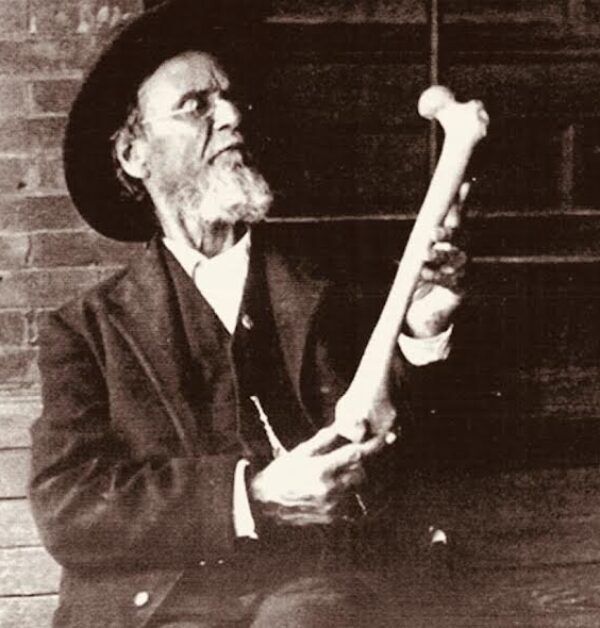
Osteopathy originated in 1874 and was developed by the American physician Andrew taylor Still. Dr. Still`s ideas were driven by the same ambition that - following the Flexner Report in 1911 - would later reform American medicine: to ground medical practice on a more solid scientific basis. Still was critical of the use of harmful, ineffective, and addictive medications in medical practice. He also argued that physicians lacked sufficient understandng of the normal functioning of the human body, diseases, and the effects of medicines.
A Personal Tragedy as the Turning Point
In 1864, Still lost three of his children to spinal meningitis. This devastating loss forced him to question everything he had learned as a physician. He began asking himself whether God or nature had truly provided no better answer to disease. Still was convinced that the human body possesses it`s own inner healing capacity. According to him the remedy is already present in the body - provided one understands how the body truly functions.
Still was not alone in this regard: Hippocrates, Galen, and Thomas Sydenham likewise criticised the medical practices of their time and emphasized the body's innate capacity for self-healing (Seffinger et al.).
The Body as the Greatest Study
Driven by a strong belief and an insatiable curiosity, Still devoted himself to the study of anatomy. He dissected and examined the human body in meticulous detail, viewing the skeleton as the key to health. For him: "The greatest study of man is man himself".
Through the study of anatomy, Andrew Taylor Still gained an almost supernatural familarity with the human body. But he didn`t limit himself to anatomy alone, he also explored biology, early embryology, physics, chemistry, astronomy, and other sciences. His appraoch was practical: he only adopted ideas that proved effective in practise for himself and his patients.
The Philosophy Behind Osteopathy
In his book The Philosophy of Osteopathy, Still described osteopathy as a science derived from the immutable laws of nature. At its core lies the principle that the body has an inherent ability to heal itself — provided its structure allows it to function optimally. In other words: if the body functions 'normally' from an anatomical perspective, health can be maintained.
He believed that illness often occurs when bones and tissues are displaced from their optimal alignment, resulting in pressure on nerves, blood vessels, and other structures. Through manual adjustment of the body, this pressure can be alleviated, allowing the body’s natural healing processes to function, as intended.
Why the Name “Osteopathy”?
In the 1880s, Still chose the term “osteopathy,” combining the Greek words osteon (bone) and pathos (suffering). The name was not meant to imply “bone disease,” but rather to emphasize the central role of the bones in detecting and correcting dysfunction.
Bones, for Still, served as landmarks and levers — practical access points through which structural imbalances could be identified and addressed.
Modern interpretations, such as those of Irvin Korr, help explain this concept scientifically. Nerves and blood vessels often pass between or through bones and connective tissues. When these structures are restricted or compressed — for example through fascial strain or trauma — function can be impaired. Gentle manual techniques can help relieve these restrictions and restore physiological balance.
A Vision Ahead of Its Time
Still was influenced by earlier medical thinkers such as Hippocrates, who emphasized the body’s natural capacity for healing. However, Still’s integration of anatomy, philosophy, science, and spirituality created something entirely new.
His central message remains relevant today: The body is an integrated whole, governed by natural laws, and equipped with a profound capacity for self-healing. He discovered the close relationship between structure and function.
From Andrew Taylor Still`s perspective, the role of the practitioner is essentially not to 'heal'', but rather to create the conditions in which the body can heal itself.
Sources
Andrew Taylor Still. Autobiography of Andrew T. Still. Kirksville, MO: Published by the author, 1897.
Andrew Taylor Still. Philosophy of Osteopathy. Kirksville, MO: Published by the author, 1899.
Booth 1905. History of Osteopathy and twentieth century medical practices.
Buekens J. 2020. Bone, the Best kept Secret.
Norman Gevitz. The DOs: Osteopathic Medicine in America. 2nd ed. Baltimore: Johns Hopkins University Press, 2004.
Seffinger et al. 2002. Osteopathic Philosophy.
 Wendy is an osteopath and former lecturer in osteopathy. She holds a Master`s degree in Physical Education and Movement Sciences and is the owner of Osteopathie Herengracht, Amsterdam.
If you are interested in our next blog, you can subscribe to our newsletter. You will then be the first to know about new blogs.